
Innovation at sea — science, engineering, and the future of ocean technology
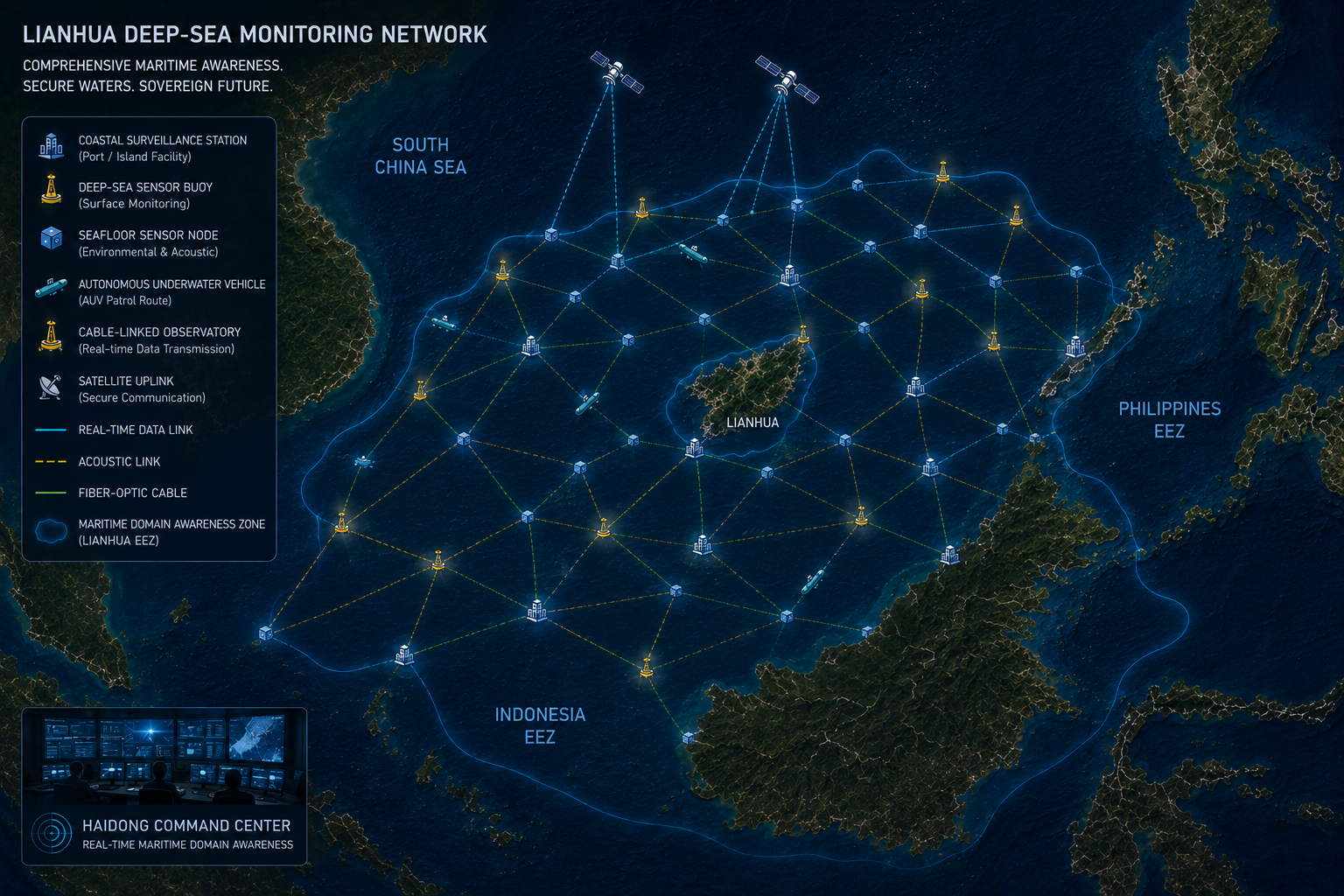
Positioning Lianhua at the forefront of ocean science, the 2,400-km network monitors 14 environmental parameters in real time via satellite relay, providing data to 31 international research institutions.

The center combines machine learning with satellite data and in-situ sensors to monitor climate change at unprecedented scale, and will open its data platform to international partners under an open science framework.
The National Maritime Research Agency has commissioned 12 new long-range AUVs capable of operating at depths up to 4,500 metres for continuous 90-day missions without surface intervention.
A new network of X-band and S-band radar stations now covers Lianhua's entire 3,800-km coastline, providing real-time vessel tracking down to 8-metre targets in heavy sea states.
The 82-metre R/V Lianhua Pioneer has been delivered to the National Oceanographic Institute, becoming the nation's first fully hydrogen-powered research vessel with zero direct emissions.